
Food & Eating Out in Bangkok
Bangkok is one of the world’s great food cities. You can eat incredibly well for just a few dollars on the street, enjoy refined Thai cooking in stylish restaurants, or sample regional dishes from all over the country – often on the same day.
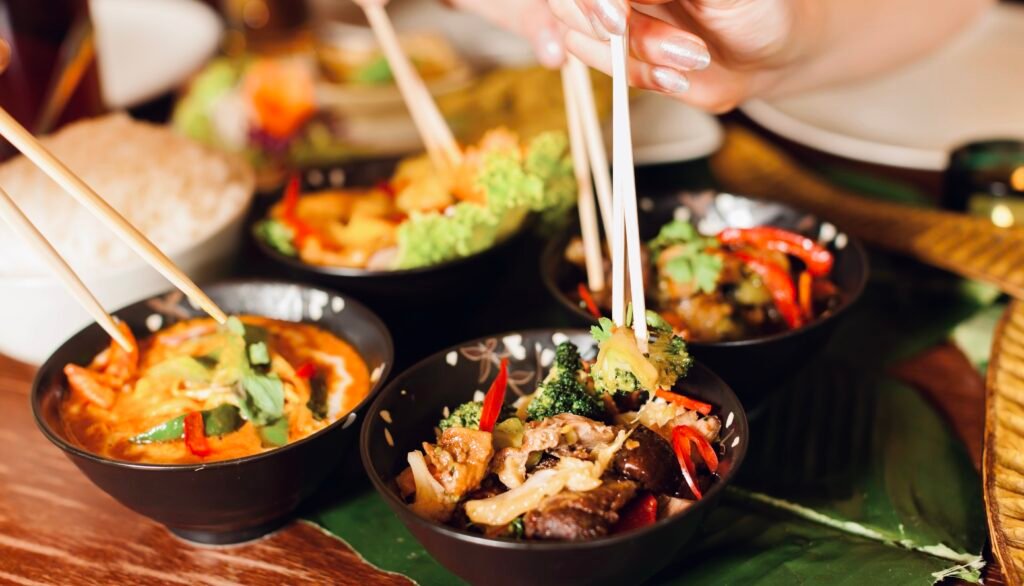
This guide focuses on food and explains what to expect, what to try, and where visitors tend to eat – whether you’re adventurous, cautious, vegetarian, or somewhere in between.
What Eating Out Is Like in Bangkok
A few things surprise first-time visitors:
- Eating out is normal and affordable – many locals rarely cook at home
- Quality food is available everywhere, not just in restaurants
- Casual places can be exceptional
- Menus are often picture-based or partially translated
You don’t need to seek out “fancy” places to eat well – some of Bangkok’s best food comes from tiny kitchens with plastic stools.
Bangkok Street Food
Street food is a huge part of Bangkok’s food culture and remains widely available despite the occasional regulation changes.
What to expect
- Freshly cooked food made to order
- Very fast service
- Simple seating on stools (or takeaway only)
- Low prices
Busy stalls with high turnover are generally a good sign.
Popular street food dishes
- Pad Thai – stir-fried rice noodles with egg, tofu, shrimp or chicken
- Pad Kra Pao – basil stir-fry, usually served with rice and a fried egg
- Som Tam – green papaya salad (can be very spicy)
- Moo Ping – grilled pork skewers
- Boat Noodles – rich, dark broth with noodles and meat
- Mango Sticky Rice – classic dessert
Street food tips
- Pointing is completely acceptable
- Ask for low spice levels if you’re sensitive to heat
- Cash is king at most stalls
Restaurants (From Casual to Well‑Known)
Bangkok has everything from humble shophouses to internationally recognised restaurants. Many places become famous not because they are fancy, but because they do one or two dishes exceptionally well.
Rather than a “best of” list, here are a few well‑known places you may have heard about, included simply as reference points. They suggest the range of Bangkok food, not a checklist you need to complete.
Well‑known food spots you might recognise
- Jay Fai (Old Town)
World‑famous street food cooked over charcoal by a single chef. Known especially for crab omelettes and drunken noodles. Expect high prices by street‑food standards and possible queues. - Thip Samai Pad Thai (Old Town)
Often described as one of Bangkok’s most famous Pad Thai spots. Thip Samai is busy, fast‑moving, and focused almost entirely on variations of one dish. - Krua Apsorn (Old Town / Government District)
A long‑running Thai restaurant popular with locals and visitors alike. Krua Apsorn is known for classic central Thai dishes and excellent value. - Somtum Der (multiple locations)
Specialises in Isaan (northeastern Thai) food, particularly som tam (papaya salad). A good introduction to spicier regional flavours in a comfortable setting. - Yaowarat (Chinatown street food area)
Not a single restaurant, but one of Bangkok’s most famous food districts. Seafood, noodles, desserts, and late‑night dining packed into a few lively streets.
Many visitors discover that their favourite meals come from places they never planned to visit: a stall they passed by, a restaurant near their hotel, or something they pointed at in a food court.
Food Courts & Shopping Malls
Bangkok’s malls are serious food destinations, not just shopping centres.
Why eat at malls?
- Huge variety of Thai dishes in one place
- Clean, air-conditioned environment
- Fixed prices (no surprises)
- Easy ordering by pointing at photos
Food courts often include regional Thai dishes you may not recognise – ordering something unfamiliar is part of the fun. Prices range from very affordable food courts to higher-end dining floors, all under one roof.
Markets & Night Markets
Markets are excellent places to eat, snack, and explore.
What you’ll find
- Grilled meats and seafood
- Prepared meals and snacks
- Desserts and sweets
- Regional specialities
Some markets focus more on eating, others on shopping with food as a bonus. Evening and night markets are particularly popular for casual dining.
Areas With High Concentrations of Food
Certain parts of Bangkok are especially good for eating:
- Chinatown (Yaowarat) – legendary street food and late-night dining
- Sukhumvit – international food, Thai restaurants, casual dining
- Siam – everything from street food to molecular gastronomy
- Silom & Sathorn – lunch spots and after-work dining
- Old Town & Khao San area – budget-friendly and traveller-oriented options. Khao San Road isn’t the best for authentic Thai food though, it’s generally quite westernised.
Exploring neighbourhoods on foot is often the best way to discover great food.
Regional Thai Cuisine
Thai food isn’t one style – it varies by region:
- Central Thai – balanced, slightly sweet (many classic dishes)
- Isaan (Northeastern) – spicy, sour, grilled meats, sticky rice
- Northern Thai – milder curries, herbs, noodle dishes
- Southern Thai – very spicy, seafood-focused
Bangkok is one of the best places to sample all of these in one city.
Vegetarian & Special Diets
Eating vegetarian in Bangkok is possible, but it requires some awareness.
Important to know
Many Thai dishes – even those ordered without meat may include:
- Fish sauce
- Shrimp paste
- Oyster sauce
Tips for vegetarians
- Look for jay / เจ or vegetarian signs
- Ask specifically if fish sauce is used
- Indian, Middle Eastern, and some Chinese restaurants offer good vegetarian options
Vegan options are increasingly available, especially in central areas.
Niche & International Food
Bangkok is very international. You’ll find excellent:
- Japanese, Korean, and Chinese food
- Indian, Middle Eastern, and vegetarian restaurants
- Western comfort food
This makes Bangkok easy for longer stays or visitors who want variety alongside Thai food.
Food Safety & Practical Tips
- Busy places are usually safest
- Bottled water is standard
- Napkins may be limited – carry tissues
- Don’t be afraid to ask for less spice (see below)
If something looks good and locals are eating there, it’s usually a safe bet.
Spicy or Not Spicy
It’s your choice, but be aware Thai food can be very spicy (hot). Here are some simple phrases that may help when ordering if you want to avoid full-on heat:
“Not spicy at all”: “Mâi phèt” (ไม่เผ็ด)
“A little bit spicy/mild”: “Phèt nói nói” (เผ็ดน้อยๆ)
So for example, to order a not spicy Pad Thai, simply say “Pad Thai, mâi phèt“.
How Adventurous Should You Be?
You don’t need to eat insects or mystery dishes to enjoy Bangkok food. A simple approach works well:
- Start with familiar Thai dishes
- Try one new thing each day
- Eat where it’s busy
Many visitors leave Bangkok talking about the food as much as the sights – and often planning meals before attractions.
Final Thought
Food is one of Bangkok’s greatest pleasures. Whether you’re eating from a street stall, a mall food court, or a long-established restaurant, you’re experiencing something deeply local.
You don’t need a checklist – just curiosity and an appetite.