
Plan Your Trip to Bangkok: What to Know Before You Go
Introduction
Planning a trip to Bangkok is surprisingly straightforward. Thailand is one of the easiest countries in Asia to visit, and Bangkok is well set up for international travelers.
This page gives you a clear overview of what to expect – when to visit, visa basics, staying connected, costs, neighbourhoods, and simple itinerary ideas – without overcomplicating things.
For deeper guides, you’ll find links throughout.
1. Best Time of Year to Visit Bangkok
Bangkok is a year-round destination, but seasons do affect comfort and crowd levels.
Cool Season (November–February)
Warm days, lower humidity, and ideal sightseeing weather. This is peak season, so hotels cost more and popular attractions are busier.
Hot Season (March–May)
Temperatures can reach 38°C (100°F). It’s intense, but manageable with air conditioning, shopping malls, and pool breaks. Hotel deals are easier to find.
Rainy Season (June–October)
Short, heavy showers are common – often in the afternoon. The city is greener, slightly quieter, and often better value.
Festival Highlights
- Songkran (April 13–15) – Thai New Year and a nationwide water festival
- Loy Krathong (November) – Floating lanterns and candlelit offerings
- Chinese New Year – Best experienced in Chinatown
Important (Songkran):
If you visit during Songkran, understand that you will get soaked. Buckets, hoses, and high-powered water guns are used everywhere – even on main roads. It’s all good fun, but protect phones, passports, wallets, and cameras with waterproof bags or leave them at your hotel. If you dislike crowds or being drenched, consider different travel dates.
2. Entry Requirements, Visas & the Thailand Digital Arrival Card (TDAC)
Visa Basics
Many nationalities can enter Thailand visa-free for up to 60 days, though regulations can change. Thailand has announced potential reductions to 30 days, but timelines are unclear – always confirm the latest rules before booking.
General requirements:
- Passport valid for at least 6 months
- Proof of onward travel (occasionally requested)
- Sufficient funds for your stay (officially 20,000 THB per person, though rarely checked for typical short-term tourists)
Immigration officers may also ask to see proof of accommodation, particularly if you have multiple recent entries to Thailand.
Common entry types:
- Visa-Free Entry – Currently up to 60 days (often extendable once for 30 days)
- Tourist Visa (Single Entry) – 60 days, obtained from Thai embassies
- Visa on Arrival – 15 days (for eligible countries)
Thailand Digital Arrival Card (TDAC)
Thailand introduced the Thailand Digital Arrival Card in 2024, replacing the old TM6 paper form.
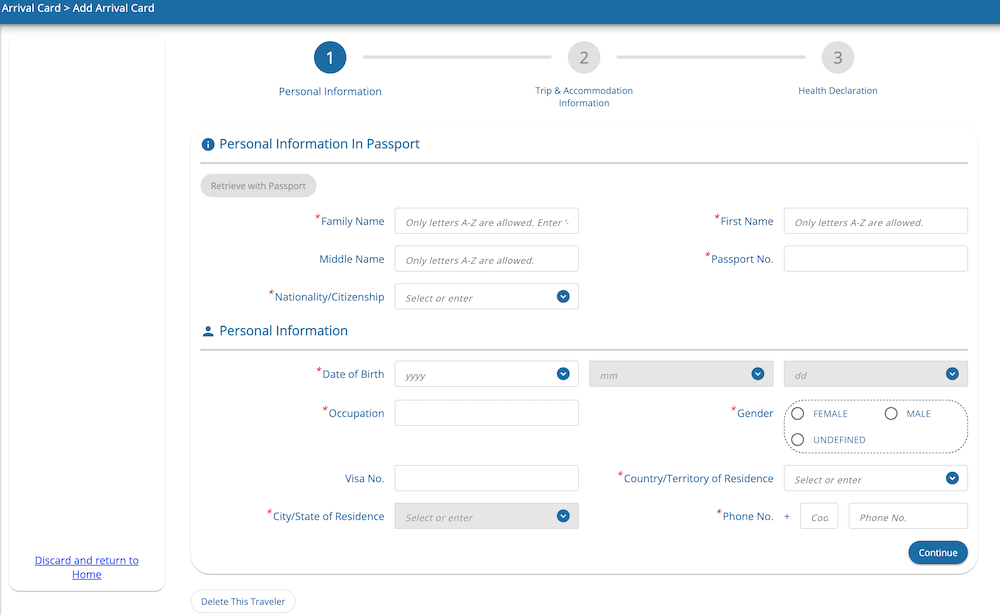
How it works:
- Complete online within 3 days before arrival
- Receive a QR code
- Show it at immigration (phone or printed copy)
Tip: Save the QR code offline (Apple/Google Wallet works well) in case airport Wi-Fi is slow.
You may also want to read our guide on getting from Bangkok Airport to the city.
3. SIM Cards & Staying Connected
For most short-term visitors, buying a SIM card at the airport is the simplest option.
Yes, it costs slightly more than buying in the city – but you’ll:
- Have internet immediately
- Avoid relying on public Wi-Fi
- Be able to access hotel bookings, maps, and transport apps
- Get help setting it up at the counter
Major Thai networks offer tourist packages with plenty of data.
eSIMs can look cheaper, but some have limitations (such as restricted tethering or slower speeds). They work well for some travelers, but for most people, a physical airport SIM is the easiest and most reliable choice.
Longer-term travelers or ultra-budget visitors may prefer alternatives – but for 95% of typical trips, airport purchase is worth it.
4. Money, Budget & Typical Costs
Bangkok offers excellent value, though your spending depends on your style.
| Item | Budget (THB) | Mid-Range (THB) | Luxury (THB) |
|---|---|---|---|
| Street food meal | 50–100 | — | — |
| Casual restaurant | — | 250–600 | 1,000+ |
| Hotel (per night) | 600–1,200 | 1,500–3,000 | 5,000+ |
| BTS/MRT fare | 20–60 | — | — |
| Taxi/Grab | 100–400 | — | — |
Money Tips
- ATMs typically charge 250 THB per withdrawal.
- Exchange booths in the city usually offer better rates than airports.
- Credit cards are accepted in hotels and larger restaurants, but cash is still essential for markets and street food.
- If bringing foreign banknotes to exchange, they must be very clean and undamaged – heavily folded, marked, or worn notes may be refused.
- You’ll often receive 1,000 THB notes from ATMs; smaller vendors may not have change, so use large notes at malls or convenience stores.
5. What to Pack
Bangkok is casual and practical. You don’t need much.
Essentials:
- Lightweight, breathable clothing and comfortable walking shoes
- Power adapter (most hotels have US-style outlets, 220V; a universal adapter is useful)
- Sunscreen and mosquito repellent (although you can get Thai mosquito repellent at 7-Eleven)
- Modest clothing (shoulders and knees covered) for temple visits
Laundry services are inexpensive and widely available, so there’s no need to overpack.
6. Useful Apps & Booking Tools
These make Bangkok even easier:
- Google Maps – Reliable for transport routes
- Grab / Bolt – Ride-hailing and more
- Google Translate – Helpful for menus
- LINE MAN / Foodpanda – Food delivery
- BTS & MRT apps – Fare and route info
- Klook & KKday – Attraction tickets and tours
- XE Currency / Wise – Exchange tracking
- Agoda, Booking.com, Trip.com – Useful for flexible hotel bookings and last-minute deals
7. Where to Stay in Bangkok
Bangkok’s neighborhoods each offer a different experience. Choosing the right area makes getting around easier and shapes the tone of your trip.
In simple terms:
- Want a balanced, well-connected base with restaurants, markets, parks, and easy transport? → Silom
- Want nightlife and modern convenience? → Sukhumvit
- Want shopping and central access? → Siam
- Want riverside views and luxury hotels? → Riverside
- Want street food and heritage atmosphere? → Chinatown
- Want budget options and a lively backpacker scene? → Khao San Road
For a full breakdown of neighbuorhoods, pros and cons, transport access, and hotel suggestions, see our detailed Where to Stay in Bangkok guide.
8. Suggested Itineraries
These are simple starting points – adjust them to suit your pace and interests.
1 Day
Morning: Grand Palace & Wat Pho
Afternoon: River boat ride
Evening: Chinatown or a rooftop bar
3 Days
Day 1: Old City temples
Day 2: Siam shopping + evening rooftop
Day 3: Day trip to Ayutthaya or floating market
5 Days
Combine the above with local markets, a cooking class, Jim Thompson House, and time to explore different districts.
1 Week
Add slower mornings, café hopping, Muay Thai fights, and one overnight trip outside the city.
9. Nearby Destinations
Bangkok is a transport hub, making short trips easy.
- Ayutthaya – Historic ruins, 1 hour away
- Pattaya – Closest beach city
- Hua Hin – Relaxed seaside town
- Kanchanaburi – Nature and River Kwai
- Southern islands such as Phuket, Koh Samui, and Krabi are easily reached by short flights.
10. Final Tips
- Use licensed taxis or ride-hailing apps for predictable fares.
- Dress modestly at temples (shoulders and knees covered).
- Stay near a BTS or MRT station to save time navigating traffic.
- Don’t overpack – laundry services are widely available.
Summary
Bangkok is dynamic but easy to navigate once you understand the basics. With simple preparation – visa check, SIM card, accommodation near transport – your trip should start smoothly.
Plan lightly, stay flexible, and leave room for the unexpected. Bangkok often rewards curiosity more than strict scheduling.