
Bangkok Attractions: What’s Worth Seeing on Your First (or Fifth) Visit
If you’re planning a trip to Bangkok, one of the first questions you’ll face is which attractions are actually worth your time. The city is packed with temples, markets, museums, neighbourhoods and experiences – far more than most visitors can cover in one trip.
This page is designed to help you decide what to prioritise, whether you’re visiting Bangkok for the first time or returning with a bit more time to explore. Below you’ll find the 10 most in-demand and widely visited attractions – the places that define Bangkok for most travellers – followed by a selection of lesser-known but rewarding sights that add depth, variety and a more local feel to your stay.
This guide focuses on what each attraction is, where it fits into the city, and why you might want to include it. Opening times and ticket prices often change, so where possible we’ll link to the official source so you can get the most up-to-date details. Let’s go!
The 10 Must-See Attractions in Bangkok
1. The Grand Palace & Wat Phra Kaew (Temple of the Emerald Buddha)
The Grand Palace is Bangkok’s most famous landmark and the historic heart of Thailand’s royal and religious life. Located on the east bank of the Chao Phraya River, this vast complex served as the official residence of Thai kings for over 150 years.
Within the palace grounds sits Wat Phra Kaew, home to the Emerald Buddha — Thailand’s most revered religious image. The combination of golden spires, intricate murals and formal courtyards makes this one of the most visually striking places in Southeast Asia.
For most visitors, this is a non-negotiable first-time sight, offering insight into Thai culture, monarchy and Buddhism all in one location. It pairs naturally with nearby temples and river transport, making it a cornerstone of any Bangkok itinerary.
2. Wat Pho (Temple of the Reclining Buddha)
Just south of the Grand Palace lies Wat Pho, one of Bangkok’s oldest and largest temples. It is best known for the giant reclining Buddha, an enormous gold-leaf-covered statue that stretches nearly the length of a football field.
Beyond the headline statue, Wat Pho is also an important centre for traditional Thai medicine and massage. The temple grounds are calmer and more spacious than many visitors expect, with courtyards, chedis and quiet corners ideal for slowing down after the intensity of the Grand Palace.
Wat Pho works particularly well as part of a half-day temple circuit and is often appreciated for its slightly more relaxed atmosphere compared to Bangkok’s busiest sights.
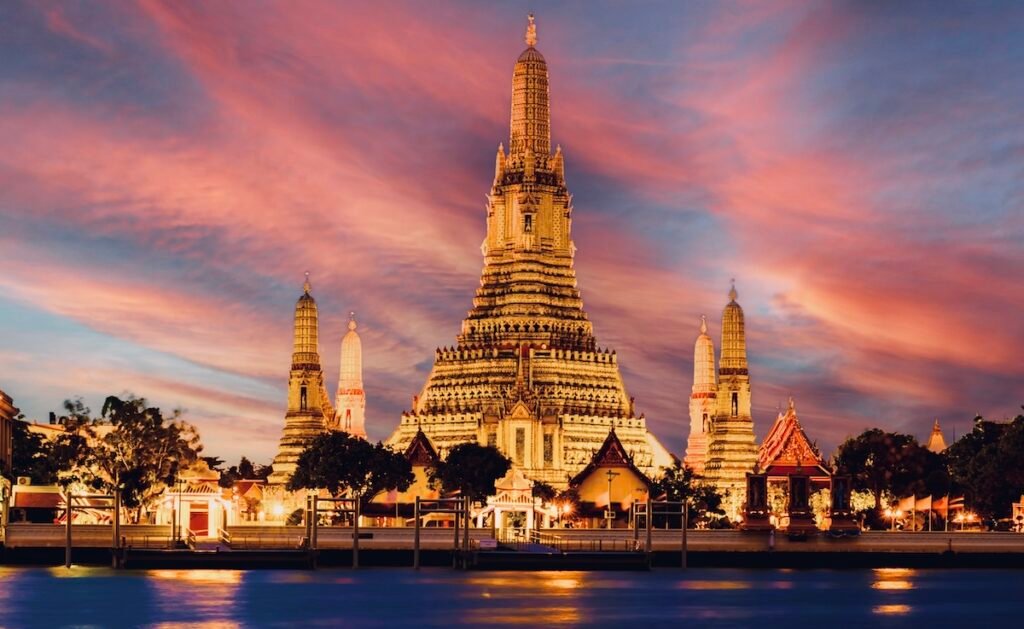
3. Wat Arun (Temple of Dawn)
Wat Arun stands directly across the river from Wat Pho and is one of Bangkok’s most recognisable silhouettes. Its central prang (tower) rises steeply above the Chao Phraya River and is decorated with colourful porcelain and seashell fragments.
The temple looks different depending on the time of day – glowing softly in the morning and dramatically lit after dark – making it a favourite for photographers. Visiting Wat Arun also introduces many travellers to river ferries, an essential and scenic way to get around central Bangkok.
Wat Arun is compact compared to other major temples, making it an easy addition to a riverside itinerary rather than a full standalone stop.
4. Chatuchak Weekend Market
Chatuchak Weekend Market is one of the largest markets in the world and a Bangkok institution. Open primarily on weekends, it’s a sprawling maze of stalls selling everything from clothing and antiques to plants, art, pets and street food.
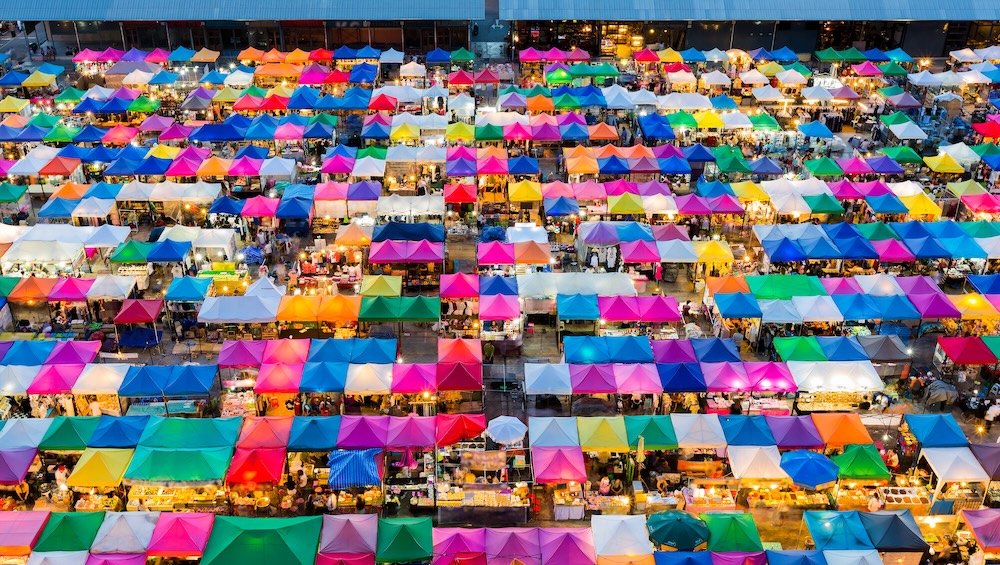
For visitors, Chatuchak offers a chance to experience Bangkok at full throttle – noisy, chaotic, colourful and endlessly interesting. It’s less about seeing a single attraction and more about immersing yourself in the city’s everyday energy.
Because of its size, many travellers choose to focus on just one or two sections rather than trying to see everything. It’s also a useful gateway to nearby parks and cafés, making it easy to combine shopping with downtime.
5. Jim Thompson House
The Jim Thompson House is a compact museum located near the Siam shopping district. It was once the home of Jim Thompson, an American entrepreneur who played a major role in reviving Thailand’s silk industry in the mid-20th century.
The house itself is a collection of traditional Thai structures surrounded by gardens, canals and shaded walkways. Inside, visitors learn about Thai architecture, art and the mystery surrounding Thompson’s disappearance.
This attraction appeals especially to travellers interested in design, history and culture, and its central location makes it easy to fit into a busy sightseeing day.
6. Khao San Road & the Banglamphu Area
Khao San Road is famous worldwide as a backpacker hub, but the surrounding Banglamphu neighbourhood offers more than nightlife alone. During the day, the area is filled with cafés, markets, temples and travel services, while evenings bring street food, music and social energy.
For some visitors, Khao San is an essential introduction to Bangkok’s more chaotic side; for others, it’s a quick stop before moving on. Either way, it remains a cultural reference point and a useful base for budget travellers.
The area also sits close to several historic temples and river piers, making it more strategically located than it first appears.
7. Chinatown (Yaowarat)
Bangkok’s Chinatown, centred around Yaowarat Road, is one of the city’s most vibrant neighbourhoods. By day it’s a dense commercial district of gold shops, wholesalers and markets; by night it transforms into one of Bangkok’s top street food destinations.
Chinatown is less about ticking off landmarks and more about wandering, eating and observing. Narrow side streets hide temples, traditional medicine shops and family-run eateries that have been operating for generations.
For food lovers and photographers, Chinatown is often a highlight of the trip and rewards repeat visits at different times of day.
8. Asiatique The Riverfront
Asiatique is a large riverside complex that blends shopping, dining and entertainment in a restored warehouse setting. Located downriver from the historic centre, it’s designed to be explored in the evening and offers wide walkways, river views and casual dining.
While it doesn’t replace traditional markets, Asiatique provides a comfortable, family-friendly introduction to Bangkok nightlife, especially for visitors who prefer a more organised environment.
Its riverfront location also makes it a natural stop when exploring the Chao Phraya by boat.
9. Siam Area & Bangkok’s Mega Malls
The Siam district is Bangkok’s modern commercial heart, anchored by major shopping centres such as Siam Paragon, Siam Center and MBK. This area highlights a different side of the city: air-conditioned malls, global brands, cinemas and food courts.
Even travellers who don’t plan to shop often find themselves passing through Siam, as it’s a major transport hub and close to attractions like the Jim Thompson House.
The malls themselves are destinations, offering everything from luxury boutiques to affordable souvenirs and some of the city’s most accessible dining options.
10. Chao Phraya River & Canal (Khlong) Experiences
The Chao Phraya River has shaped Bangkok for centuries, and exploring the city from the water offers a completely different perspective. Public express boats, ferries and longtail boats connect temples, neighbourhoods and markets along the river.
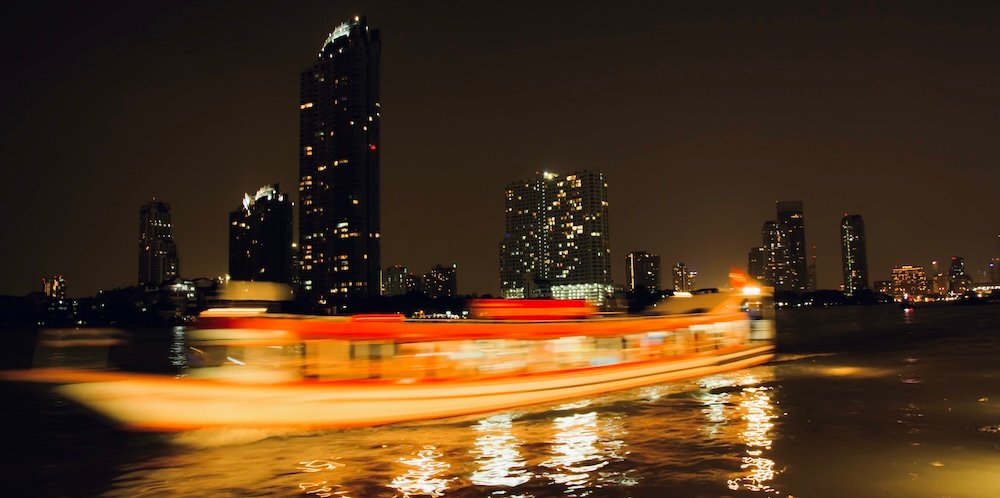
Canal tours in areas like Thonburi reveal quieter residential life, stilt houses and local communities that contrast sharply with central Bangkok’s traffic-filled streets.
For many visitors, time on the river becomes one of the most memorable parts of their trip.
Lesser-Known but Highly Rewarding Attractions
Bang Krachao (Bangkok’s “Green Lung”)
Often described as Bangkok’s green lung, Bang Krachao is a large, leafy area just across the river from the city’s central business districts. It’s popular with locals for cycling, weekend markets and relaxed cafés.
Despite its proximity to downtown, Bang Krachao feels almost rural and is ideal for travellers seeking nature, fresh air and a slower pace without leaving the city.
Museum of Contemporary Art (MOCA Bangkok)
MOCA Bangkok showcases modern Thai art in a spacious, well-designed gallery space north of the city centre. The museum provides cultural context that complements Bangkok’s historic temples and traditional art forms.
It’s best suited to travellers with a strong interest in art and those looking to explore beyond the usual tourist zones.
Talat Noi & Charoen Krung
Talat Noi is one of Bangkok’s oldest neighbourhoods, located near Chinatown along the river. The area is known for its street art, historic shophouses and independent cafés.
A walk through Talat Noi offers a glimpse into Bangkok’s layered past and present, blending heritage buildings with creative spaces and river views.
Erawan Shrine
The Erawan Shrine sits at one of Bangkok’s busiest intersections and is dedicated to the Hindu god Brahma. Despite the surrounding traffic and shopping malls, the shrine remains a place of active worship.
Visitors often stop briefly to observe traditional dance offerings and local rituals, making it a short but culturally significant experience.
Pak Khlong Talat (Flower Market)
Bangkok’s main flower market operates around the clock and supplies florists, temples and vendors across the city. Early morning visits reveal the market at its most active.
The vibrant colours and constant movement make this a favourite for photographers and those interested in everyday Bangkok life.
Baan Silapin (Artist’s House)
Located along a quiet canal in Thonburi, Baan Silapin is a small cultural space showcasing traditional arts, crafts and occasional performances.
It’s an excellent stop for travellers interested in canal life and community-based cultural experiences.
Bang Nam Phueng Floating Community
Less commercial than Bangkok’s better-known floating markets, Bang Nam Phueng offers a more local feel with food stalls, small shops and community spaces.
It works well as a half-day escape and pairs naturally with cycling or riverside exploration.