Getting Around Bangkok – BTS, MRT, Taxis, Buses and More
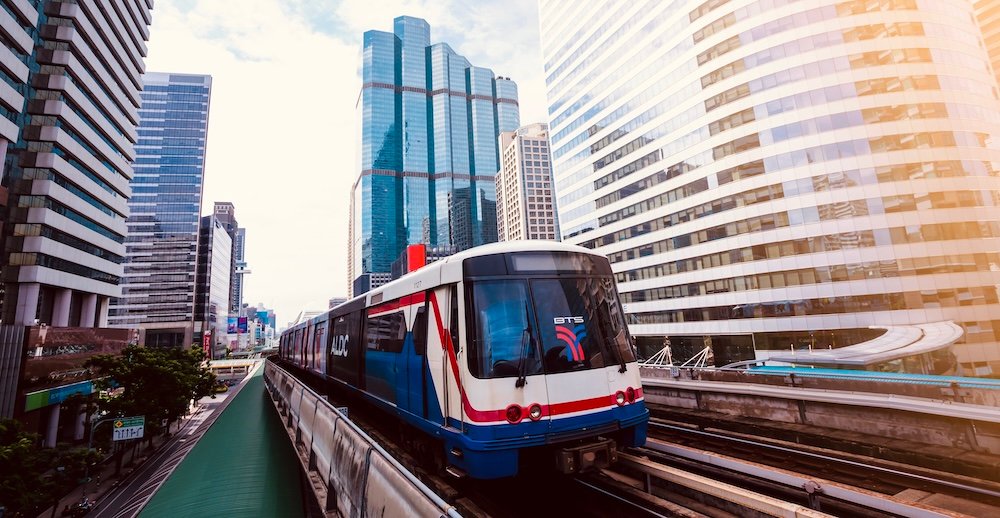
Bangkok looks chaotic at first glance, but getting around is usually easier (and cheaper) than most visitors expect. The city has modern rail systems, plentiful taxis and ride-hailing apps, a huge bus network, and a few uniquely Thai transport options you’ll quickly become familiar with.
This guide explains how Bangkok transport works in practice, what to expect on the ground, and how to avoid common tourist headaches.
BTS Skytrain
The BTS Skytrain is one of the easiest and most visitor-friendly ways to move around Bangkok. It’s clean, air-conditioned, frequent, and avoids traffic entirely.
If you’re staying in central areas like Sukhumvit, Siam, Silom or Sathorn, there’s a good chance you’ll be within walking distance of a BTS station.
How to Use the BTS
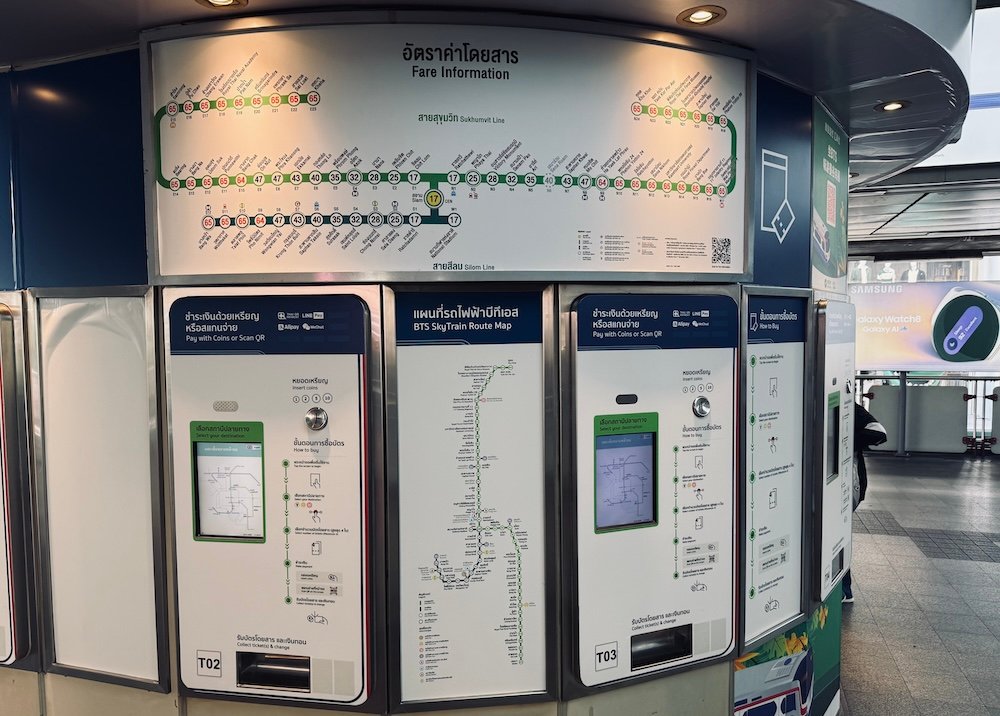
- Buy single-journey tickets from machines or ticket counters
- Purchase a One-Day Pass (currently 150 baht)
- Use a Rabbit Card (stored-value card)
- Tap in and out at automatic gates
Ticket prices depend on distance. Most short central journeys cost roughly the equivalent of US$1-2, making it both convenient and affordable.
One-Day Pass
A BTS One-Day Pass (currently 150 baht) can be worthwhile if you plan to make multiple trips in a single day along the two main green Sukhumvit and Silom lines used by most visitors.
For short, busy sightseeing days, it also means no queuing for tickets between stops.
Rabbit Card (Stored-Value)
A Rabbit Card is available, but recent requirements may include presenting your passport and registering a Thai phone number. There is also a 100 baht card issuance fee (no credit included).
For short stays, many visitors may find single tickets or a One-Day Pass simpler.
Good to Know
- Trains run from early morning until around midnight
- Onboard station announcements are bilingual (Thai & English)
- Peak hours (7–9am, 4:30–6:30pm) can be crowded
- Large luggage is best avoided during busy times
Best for: sightseeing, shopping areas, and travelling between popular districts without traffic.
MRT Subway
The MRT (Mass Rapid Transit) complements the BTS and covers areas the Skytrain doesn’t reach, including parts of the Old Town, Chinatown, and local neighbourhoods.
The MRT has multiple lines (Blue, Purple, Yellow and Pink) and is especially useful for markets, temples, and connections to longer-distance transport hubs.
How to Use the MRT
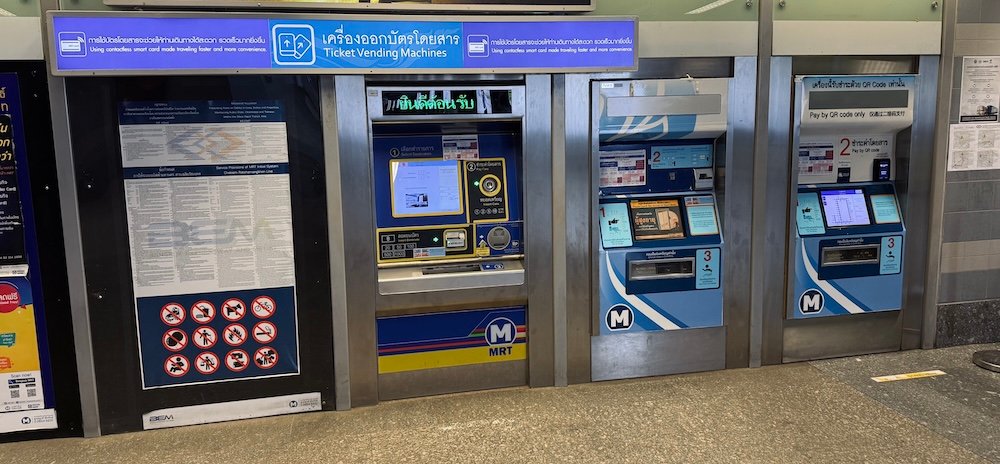
- Buy single-journey tokens from machines
- Use stored-value cards
- Tap in and out at gates
Like the BTS, fares are distance-based. Most short journeys are inexpensive by international standards and similar to prices on the BTS.
Contactless Card Payment (New Option in 2026)
You can now tap in and out on the MRT using a contactless Visa or Mastercard (smart chip card). The system calculates your fare automatically when you exit.
This is extremely convenient and avoids ticket queues. At the time of writing, this option is not yet available on the BTS.
One-Day Pass
A separate MRT One-Day Pass (also around 150 baht) is available. Note that BTS and MRT passes are not interchangeable – they are separate systems.
Good to Know
- Clear bilingual signage (Thai & English)
- Thai and English station announcements onboard
- Trains can be crowded on weekends and peak hours
- Not ideal for bulky luggage during busy periods
Best for: markets, Chinatown, Old Town access, and areas not directly covered by BTS.
Airport Rail Link (ARL)
Bangkok has two main airports:
- Suvarnabhumi Airport (BKK)
- Don Mueang International Airport (DMK)
The Airport Rail Link connects Suvarnabhumi Airport to central Bangkok.
- Terminates at Phaya Thai (connection to BTS)
- Stops at Makkasan (connection to MRT via Phetchaburi)
- Avoids road traffic entirely
- Runs from early morning until around midnight
There is no direct BTS line from the airport, you must use the Airport Rail Link first and then transfer if needed.
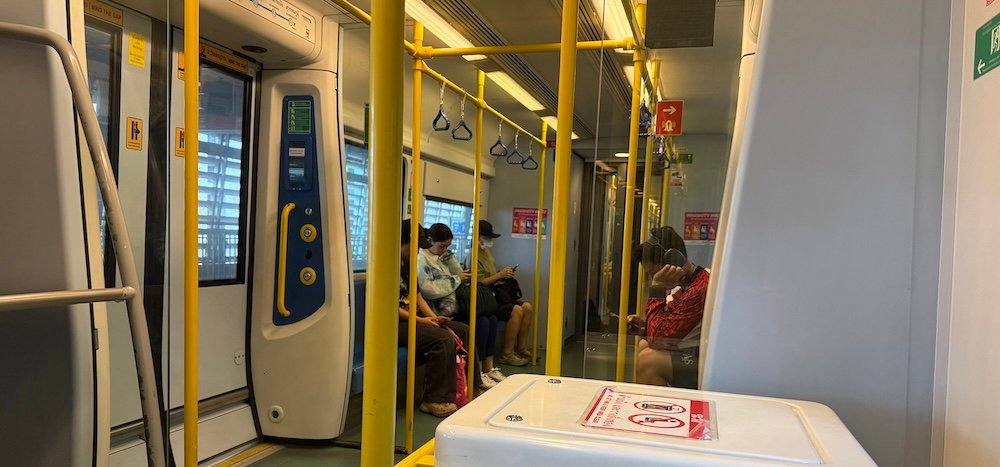
Although most visitors mainly use the ARL when arriving or departing, it can also be useful as part of cross-city journeys when combined with the MRT and BTS. In certain cases, it provides a fast alternative to road travel for destinations slightly outside the main tourist core.
For detailed instructions, routes and comparisons, see our full guide to getting from the airport into Bangkok city.
How Bangkok’s Transport Systems Connect
Bangkok’s rail systems connect at several key points, but they are operated separately.
In many cases, transferring between BTS, MRT and the Airport Rail Link involves:
- Exiting through ticket gates
- Walking a short distance (sometimes via elevated walkways or on street level)
- Purchasing a new ticket or tapping in again
They are often adjacent rather than fully integrated.
Transfers within the BTS system itself – such as switching lines at Siam – happen inside the same paid area without exiting.
This isn’t complicated, but it’s helpful to know in advance so you’re not expecting a seamless underground interchange like in some other major cities.
Getting to Bangkok’s Major Attractions by Public Transport
Below are some of Bangkok’s most popular places and how visitors typically reach them using public transport. (Nearest stations and piers vary slightly depending on route and walking preference.)
- Grand Palace – Sanam Chai MRT or Tha Chang Boat Pier (N9)
- Wat Pho – same connections as the Grand Palace above
- Wat Arun – Itsaraphap MRT Station or Wat Arun Ferry Pier
- Chatuchak Weekend Market – Kamphaeng Phet MRT station or Mo Chit BTS Station
- ICONSIAM – Iconsiam boat pier or Saphan Taksin BTS then taxi/Grab
- MBK Center – National Stadium BTS or Siam BTS
- Siam Paragon – Siam BTS
- Asiatique The Riverfront – by boat or via Saphan Taksin BTS then taxi/Grab
- Khao San Road – boat to Phra Arthit pier or Sam Yot MRT station then taxi/Grab
- Yaowarat Road Chinatown – Wat Mangkon MRT or Ratchawong pier then walk 500m
- Lumphini Park – Lumphini MRT or Sala Daeng BTS Station
- Terminal 21 – Asok BTS or Sukhumvit MRT
- Erawan Shrine – Chit Lom BTS
- Train Night Market Srinagarindra – Suan Luang Rama 9 MRT
Some attractions are best reached by a mix of rail and short taxi rides, while others are ideal for combining BTS/MRT with river boats.
In most cases, Google Maps works extremely well for planning Bangkok public transport routes in real time.
Taxis
Bangkok taxis are plentiful, air-conditioned, and generally inexpensive – when used correctly.
The Golden Rule
Always insist on the meter.
If a driver refuses to use it, politely get out and find another taxi. There are plenty.
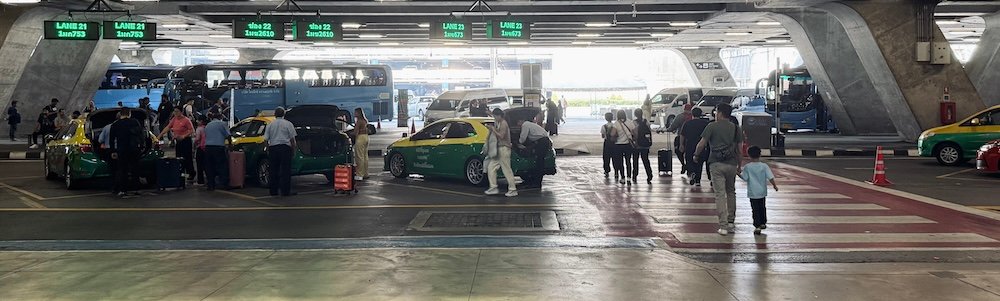
What to Expect
- Meter starts low and increases gradually
- Tollway charges (if used) are paid by the passenger
- Luggage is usually included
Common Issues
- Drivers claiming the meter is “broken”
- Flat-rate offers at tourist hotspots
- Being told your destination is “closed”
Best for: door-to-door travel, late nights, or destinations not near rail lines.
Grab, Bolt & Ride-Hailing Apps
Ride-hailing apps are widely used in Bangkok and often easier for visitors than street taxis.
Popular Apps
- Grab (most established)
- Bolt (often cheaper)
What to Know
- Price is shown upfront in the app
- Tolls are usually paid separately
- Pickup points can be tricky in busy areas or malls
- Avoid selecting pickup locations directly beside taxi or motorbike-taxi ranks
Ride-hailing is especially useful if you don’t want to explain directions or negotiate fares.
Best for: convenience, clear pricing, airport transfers.
Tuk Tuks
Tuk tuks are iconic, noisy, and undeniably fun – but not usually the cheapest option.
Important Tips
- Agree on the price before getting in
- Avoid extremely cheap offers (e.g. “anywhere for 20 baht”)
- Cheap rides often involve unwanted shopping stops
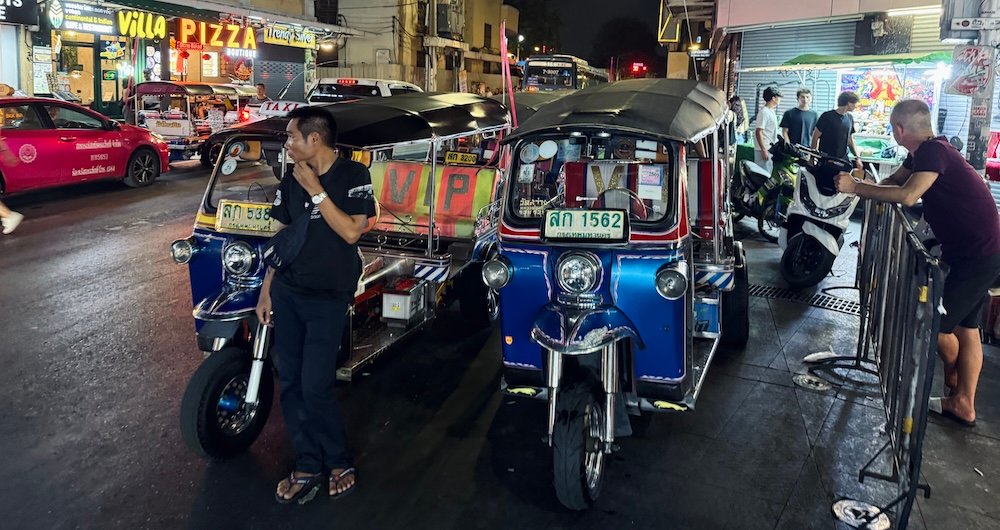
While not ideal for everyday transport, tuk tuks are absolutely worth trying at least once. At night, when traffic is lighter, the experience can be fast, atmospheric and surprisingly entertaining.
It’s also one of Bangkok’s most photogenic transport experiences.
Best for: short distances, novelty rides, and memorable first-time experiences.
Motorbike Taxis
Motorbike taxis are everywhere and extremely efficient, weaving through traffic where cars cannot.
What to Know
- Found at designated stands (drivers wear orange vests)
- Prices are negotiable
- Helmets are provided, but quality varies
They are undeniably fast, especially in heavy traffic. However, motorbike taxis carry a higher accident risk than other transport options. Visitors unfamiliar with Bangkok traffic may prefer alternatives, particularly for longer journeys.
Best for: short trips in heavy traffic (if comfortable with the risk).
Buses
Bangkok’s bus system is extensive and very inexpensive.
- Non-air-conditioned buses can cost under 10 baht (well under US$1)
- Air-conditioned buses cost slightly more
- Payment is made onboard to a conductor
- Most buses do not have English route announcements
While many short-term visitors rely on rail, buses are useful for places without BTS or MRT access, including the area around Khao San Road.
Google Maps works surprisingly well for identifying routes.
Best for: budget travel, non-rail areas, and more adventurous visitors.
Chao Phraya River Boats
The Chao Phraya River is not just scenic, it’s also one of the most practical ways to travel between Old Town, Chinatown and Riverside districts.
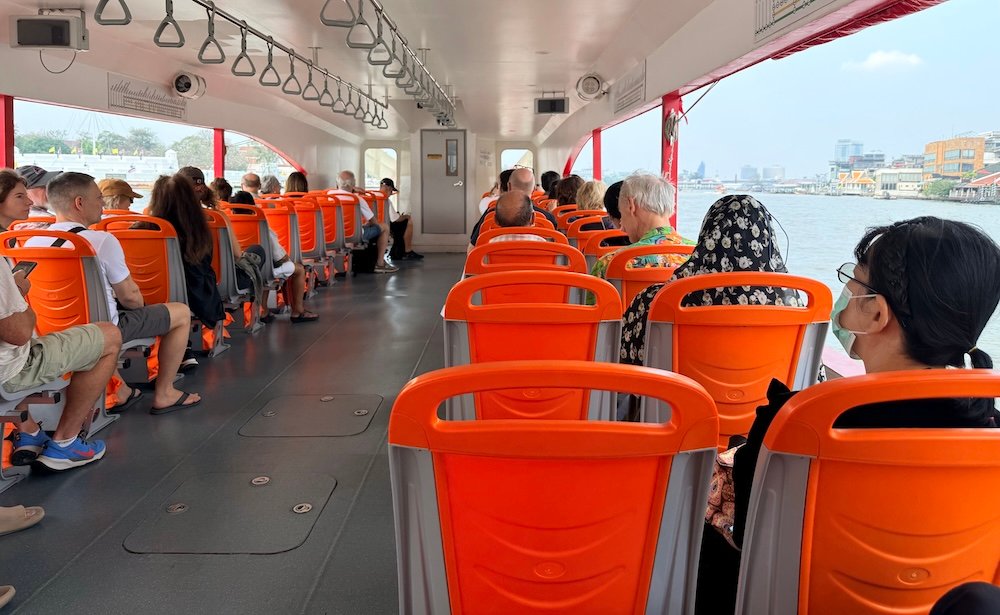
Why Use the River?
- Completely avoids road traffic
- Frequent and inexpensive
- Great views of temples and historic areas
Many short public boat journeys cost under US$1, making them both enjoyable and affordable.
What to Expect
- Boarding from floating piers
- Stepping onto the boat fairly quickly when it stops
- Tickets usually purchased at the pier
While manageable for most travellers, boarding may be challenging for anyone with mobility issues.
Tourist hop-on/hop-off boats are also available, more expensive but perhaps simpler to understand.
Best for: visiting temples, riverside attractions, and enjoying a traffic-free ride through the city.
Which Transport Should You Use?
- Central areas: BTS & MRT
- Airport connections: Airport Rail Link (Suvarnabhumi)
- Door-to-door convenience: Taxi or Grab/Bolt
- Short fun rides: Tuk tuk
- Heavy traffic: Motorbike taxi (if comfortable)
- Riverside & Old Town: River boats
Most visitors end up using a mix – and that’s completely normal in Bangkok.
Quick Tips to Avoid Problems Getting Around Bangkok
🚕 Use the meter in taxis
🛺 Agree tuk tuk prices before starting
📱 Expect tolls to be extra with ride-hailing apps
🏍 Motorbike taxis are fast but higher risk
🚆 Expect crowds during peak hours
Official Transport Resources
For the latest fares, service updates and operating hours:
- BTS Skytrain – Official website
- MRT Bangkok (Blue, Purple, Yellow & Pink Lines)
- Airport Rail Link
- Chao Phraya Express Boat – Official website
- Grab Thailand – App information
Once you’ve spent a day or two in Bangkok, the transport system starts to feel surprisingly intuitive – and mastering it is one of the keys to enjoying the city.